



Home Interior Design: Make Every Room Stylish and Smarter

Quick Overview
Good Home Interior Design is not about filling every empty corner with furniture. It is about creating a home that looks beautiful, supports your daily routine, offers enough storage and stays comfortable for years. From smart kitchen layouts to peaceful bedrooms and practical living rooms, careful planning can reduce costly mistakes while making every square foot work harder.
Home Interior Design should make everyday life easier before it makes your Instagram pictures prettier.
That sounds obvious, yet many homeowners start with wall colours, Pinterest boards and sofas before asking a more important question: “How are we actually going to live in this space?”
A beautiful living room is disappointing when there is nowhere to hide children's toys. A glossy modular kitchen quickly becomes frustrating when frequently used utensils sit three cupboards away from the cooking zone. And that dramatic bedroom ceiling may lose its charm when storage has been sacrificed to make room for it.
At DIVYA INTERIOR DESIGNER, we believe a good-looking home and a practical home should never have to compete with each other.
Before planning your interiors, keep these points in mind:
Start with your lifestyle rather than the latest trend.
Plan storage before selecting decorative finishes.
Give extra attention to kitchens, wardrobes and daily-use areas.
Compare quotations based on scope, materials and hardware, not only the final price.
Keep lighting, ventilation and future maintenance in the plan from day one.
Set aside part of your budget for unexpected changes.
Choose designs that still feel comfortable after the excitement of a new home fades.
If you are designing a flat around Gaur City or Noida Extension, our guide on Interior Design for Home Gaur City: Avoid Costly Mistakes can help you understand common planning mistakes before work begins.
Need help planning your home? Contact DIVYA INTERIOR DESIGNER at +91-8800468611 or visit https://divyainteriordesigner.com/.
What Makes Home Interior Design Truly Successful?
Interior design is more than decoration. It combines space planning, functionality, materials, lighting, colour, furniture and execution to create healthier and more pleasant spaces for occupants. This broader definition is also reflected in Wikipedia’s overview of interior design.
A successful Home Interior Design project usually solves three problems at the same time.
1. It Makes Space Easier to Use
A room can be large and still feel cramped if its furniture blocks circulation.
Before deciding where a sofa, bed or dining table will go, think about movement. Ask:
Can two people comfortably cross the room?
Can wardrobe shutters open fully?
Does the dining chair hit the wall when pulled out?
Is there enough space beside the bed?
Can kitchen cabinets open without blocking one another?
Good planning prevents beautiful furniture from turning into an obstacle course.
2. It Creates Storage Where You Actually Need It
Storage is one of the biggest differences between a house that looks organised for a photoshoot and one that stays organised every day.
Instead of adding cupboards randomly, divide belongings into categories: daily use, weekly use, seasonal items and rarely used items.
This makes it easier to plan wardrobes, kitchen drawers, TV units, lofts, shoe storage and utility cabinets intelligently.
3. It Balances Beauty With Maintenance
That textured wall might look impressive today, but will it be easy to clean?
Similarly, choosing kitchen shutters only because they look luxurious can become expensive if the finish requires frequent maintenance.
Strong Home Interior Design considers what the house will look like after five years of cooking, children, guests, cleaning and everyday life.
Bedroom Interior Design: Build a Room That Helps You Switch Off
Bedroom Interior Design should create visual calm while still providing practical storage.
The bedroom is not supposed to behave like a showroom. It is your personal reset button.
Plan the Bed First
The bed is usually the largest piece of furniture in a bedroom. Start with its position and then design wardrobes, bedside units, dressers and study areas around it.
Keep enough circulation around the bed and avoid squeezing oversized furniture into compact bedrooms simply because it looked good in a catalogue.
Design Wardrobes Around Your Lifestyle
Good wardrobe planning begins inside the wardrobe.
Think about:
Hanging clothes
Folded clothes
Sarees or suits
Shoes
Accessories
Luggage
Seasonal blankets
Daily-use drawers
A beautifully finished wardrobe with poor internal planning quickly becomes cluttered.
Keep the Colour Palette Restful
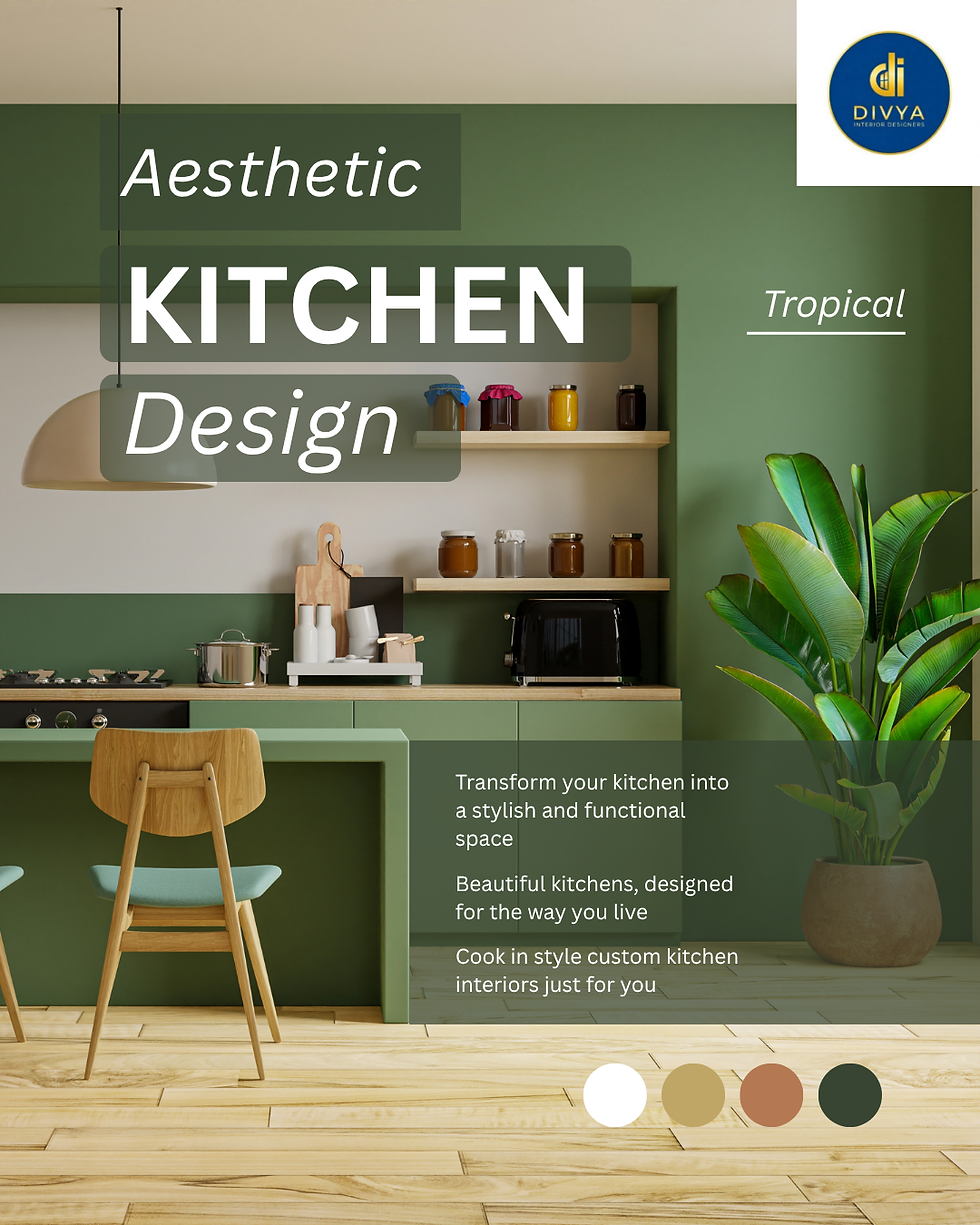
Soft neutrals, warm wood tones, muted greens and gentle pastels can create a calmer bedroom atmosphere.
You can still introduce character through one accent wall, upholstery, bedside lighting or artwork instead of making every surface compete for attention.
Living Room Interior Design: Style Should Support Real Life
Your Living Room Interior Design creates the first impression of your home, but it also handles some of the hardest daily work.
It may be a TV room in the evening, a guest area on weekends, a play area for children and sometimes even an office.
Choose Furniture According to Scale
A common mistake is buying furniture before checking measurements.
A large sectional sofa in a compact apartment can make the entire space feel smaller.
Before purchasing anything, mark the proposed dimensions on the floor using masking tape. You will immediately understand how much walking space is left.
Use Layered Lighting
Avoid depending on a single ceiling light.
Combine:
Ambient lighting
Task lighting
Accent lighting
Natural daylight
The Bureau of Energy Efficiency's residential guidance emphasises daylighting, natural ventilation and improved building-envelope performance as important parts of energy-efficient residential design.
Make the TV Unit Work Harder
A TV wall can include concealed wiring, display shelves, closed storage and space for electronics without becoming visually heavy.
For more practical ideas suited to apartments around the area, read Modern Interior Designer in Gaur City: Stylish Homes That Actually Work.
Kitchen Interior Design: Spend Time Planning Before Spending Money
Among all rooms, Kitchen Interior Design deserves some of the most careful planning.
Why?
Because a poorly planned decorative wall is irritating. A poorly planned kitchen irritates you three times a day.
Follow an Efficient Work Flow
Cooking generally involves moving between:
Refrigerator or food storage
Preparation counter
Sink
Hob
Serving area
The layout should make this movement easy.
Depending on available space, your kitchen might use:
Straight layout
L-shaped layout
Parallel kitchen
U-shaped kitchen
Island kitchen
There is no universally “best” kitchen shape. The right layout depends on room dimensions, openings, appliances and cooking habits.
Invest in Hardware You Use Every Day
Fancy finishes are visible. Good hardware is felt.
Soft-close hinges, reliable drawer channels and suitable cabinet materials can have more impact on long-term satisfaction than an expensive decorative element.
Divide Storage by Frequency
Store everyday plates, utensils and spices within easy reach.
Use higher cabinets for occasional items.
Heavy cookware should ideally stay in lower drawers rather than difficult overhead cabinets.
This simple approach makes Kitchen Interior Design far more comfortable.
Home Interior Design Cost in 2026: What Should You Budget?
There is no single fixed price for Home Interior Design because quotations may include completely different scopes.
One estimate may cover only modular woodwork. Another may include ceilings, lighting, painting, furniture, civil work and décor.
Recent 2026 industry references illustrate that difference. Livspace's India calculator currently shows broad indicative ranges of about ₹5.5–9 lakh for a 2BHK and ₹8–14 lakh for a 3BHK under one set of assumptions, while its detailed full-home guide presents higher package figures depending on scope and finish.
MagicBricks' August 2026 guide similarly places a 2BHK at roughly ₹6–10 lakh for budget interiors, ₹10–15 lakh for mid-range work and ₹15–22 lakh for premium specifications.
Practical 2026 Budget Reference
Project Level | Typical 2BHK Reference | What It May Include |
Essential | ₹5–10 lakh | Basic modular kitchen, wardrobes, selected furniture |
Mid-range | ₹10–15 lakh | Better hardware, finishes, ceiling, lighting, more customisation |
Premium | ₹15–22 lakh+ | Premium finishes, extensive custom work, upgraded materials |
Luxury | ₹25 lakh+ | Bespoke furniture, premium hardware, imported or specialised finishes |
Important: These figures are broad industry references, not a quotation from DIVYA INTERIOR DESIGNER. Your final cost depends on carpet area, materials, civil work, electrical changes, furniture, finish level and actual site conditions.
Why Can Two Interior Quotes Be So Different?
Compare quotations line by line.
Check whether they include:
Plywood or board specifications
Hardware brand and series
Kitchen countertop
Electrical work
False ceiling
Lights
Painting
Civil modifications
Loose furniture
Curtains and furnishings
GST
Transportation
Installation
Warranty
Post-handover service
The lowest number on page one does not automatically mean the lowest final cost.
How to Find a Home Interior Designer Near Me

Searching Home Interior Designer Near Me can return dozens of options. The challenge is finding someone suitable for your project.
A polished Instagram profile alone is not enough.
Use This Designer Checklist
Before finalising your designer, ask:
Have you completed projects similar to my property type?
Can I see actual completed work?
What materials will be used?
Is there a written quotation?
What is excluded?
Who manages work at the site?
How are revisions handled?
What warranty is included?
What happens if the project timeline changes?
How will payments be linked to milestones?
When you search for a Home Interior Designer Near Me, local project experience can matter because the team may already understand typical flat layouts, access restrictions, society timings and practical challenges in that neighbourhood.
Real-World Case Study: A 1,200 Sq. Ft. Noida Extension Home
Background and Problem
A useful local example comes from a published Livspace project in Ratan Pearls, Noida Extension. The property was approximately 1,200 sq. ft. with a 2.5BHK configuration. The homeowners wanted a full-home solution that remained visually warm while making sensible use of available space.
Strategy and Approach
According to the published project details, the design team used smart space planning, a soft pastel palette and teak-toned furniture. Rather than treating rooms as isolated decorative projects, the design created a consistent visual language throughout the home.
The planning approach demonstrates an important Home Interior Design lesson: visual continuity can make a compact apartment feel calmer and better connected.
Storage was integrated into practical areas, while colours remained relatively light. The approach avoided overwhelming the apartment with too many competing finishes.
Results and Impact
The published budget for the approximately 1,200 sq. ft. full-home project was ₹10–13 lakh.
That works out to roughly ₹833–₹1,083 per sq. ft. when the stated project budget is simply divided by the stated 1,200 sq. ft. home size. That calculation is only a rough comparison because pricing depends heavily on the exact work included.
More importantly, the project shows how space planning, a restrained colour palette and coordinated materials can help a family achieve a cohesive result without treating every room as a separate design experiment.
Takeaway
Do not begin with “Which laminate is trending?”
Begin with:
“What problems should this home solve for us?”
Once that answer is clear, colours, furniture and finishes become much easier decisions.
Home Interior Design Trends Worth Following in 2026
Trends should inspire your home, not control it.
Houzz's 2026 renovation study found that 54% of surveyed U.S. homeowners renovated in 2025, showing that homeowners continue investing heavily in improving existing spaces. The study is U.S.-based, so it should be treated as an international trend indicator rather than India-specific evidence.
For Indian homes, several practical trends make particular sense.
Smarter, Hidden Storage
Families increasingly want cleaner-looking rooms without sacrificing storage.
Expect more:
Full-height wardrobes
Concealed utility cabinets
Drawer-based kitchen storage
Multifunctional TV units
Storage beds
Integrated study desks
Energy-Conscious Design
Good interiors should work with daylight and ventilation instead of fighting them.
India's Bureau of Energy Efficiency notes that residential energy guidance focuses on limiting heat gain while encouraging natural ventilation and daylighting potential.
This can influence curtain selection, lighting plans, furniture placement and even colour choices.
Warm Minimalism
Minimalism no longer has to mean empty white rooms.
Warm woods, textured fabrics, gentle neutral shades and a few personalised objects can create a cleaner room without making it feel clinical.
Flexible Rooms
A guest room may also need to function as a workspace.
A dining area might double as a homework zone.
Modern Home Interior Design increasingly works best when rooms can adapt without major changes.
Expert Tips Before Starting Your Interior Project
Use this quick text-based planning guide:
SPACE → STORAGE → FUNCTION → BUDGET → MATERIAL → LIGHTING → STYLE → EXECUTION
Do not reverse that order.
Homeowners often start with style and realise later that there is not enough money left for practical improvements.
Also keep a contingency buffer for unexpected electrical, plumbing, wall or site-related work.
Interactive Element Suggestion
Add a Home Interior Cost Calculator to your website using these inputs:
Property type
Carpet area
Number of bedrooms
Kitchen type
Number of wardrobes
False ceiling requirement
Furniture requirement
Finish level: Essential / Premium / Luxury
The output can show an estimated range and a button saying:
Get an Exact Site-Based Estimate
This could improve both user engagement and lead generation.
People Also Ask About Home Interior Design
What is the most important part of Home Interior Design?
The most important part of Home Interior Design is space planning. Colours and décor matter, but they cannot fix a room where furniture blocks movement, storage is inadequate or daily tasks feel inconvenient. Start by understanding how each family member will use the room. Plan major furniture, storage, electrical points and circulation before choosing decorative finishes. Once the functional layout works, you can layer colours, lighting, textures and décor over it. A practical layout usually makes even a modestly decorated home feel more comfortable, while an expensive interior with poor planning can quickly become frustrating.
How much does Home Interior Design cost for a 2BHK?
A 2BHK Home Interior Design project in India can vary widely based on scope and materials. Recent 2026 references place many projects broadly between around ₹5 lakh and ₹22 lakh, with luxury projects going higher. A basic project may focus on a modular kitchen, wardrobes and essential furniture, while premium projects may include ceilings, lighting, flooring, civil work, customised furniture and upgraded hardware. Always ask for an itemised quotation because two designers quoting the same amount may be offering very different materials and work.
How do I choose a Home Interior Designer Near Me?
When searching Home Interior Designer Near Me, shortlist designers based on relevant completed projects, transparent quotations, material specifications and local execution capability. Ask to see actual site photographs rather than relying only on 3D renders. Your quotation should clearly mention scope, materials, hardware, payment stages, estimated timeline and exclusions. Local experience can also help when dealing with apartment society rules, delivery timings and common floor plans. Most importantly, choose a designer who asks about your lifestyle and daily routines before recommending colours or furniture. Good design begins with questions, not catalogues.
Which room should I design first on a limited budget?
If your budget is limited, prioritise spaces with the highest daily impact. For many families, that means Kitchen Interior Design first, followed by wardrobes and essential Bedroom Interior Design storage. After that, focus on the most important parts of the Living Room Interior Design, such as seating, lighting and a functional TV unit. Decorative wall panels, premium wallpapers and elaborate ceilings can be added later if required. Spending first on functionality means your home remains comfortable even if some decorative upgrades are postponed. Build a strong foundation first and beautify it gradually.
Final Home Interior Design Checklist
Before approving your project, confirm:
Furniture layout is final.
Wardrobe internals are planned.
Kitchen workflow makes sense.
Electrical points match furniture locations.
Lighting includes task and ambient layers.
Material specifications are written down.
Hardware brands are mentioned.
Colour combinations are approved.
Storage requirements have been measured.
Quote exclusions are clear.
Timeline and payment stages are documented.
Warranty conditions are understood.
A ten-minute checklist today can prevent months of “we should have thought of that earlier.”
Conclusion: Design for Your Life, Not Just for the Photograph
Great Home Interior Design does not shout for attention every time you enter the room.
Instead, it quietly makes life easier.
The drawer opens exactly where you need it. The kitchen feels natural to work in. Your bedroom feels peaceful. The living room welcomes guests without becoming difficult to maintain. And your storage keeps everyday clutter under control.
That is the difference between simply decorating a house and thoughtfully designing a home.
If you are planning a new apartment, renovating your existing property or looking for practical Bedroom Interior Design, Living Room Interior Design or Kitchen Interior Design, speak with DIVYA INTERIOR DESIGNER.
Website: https://divyainteriordesigner.com/Call or WhatsApp: +91-8800468611
Plan your home before costly mistakes get built into it. Contact DIVYA INTERIOR DESIGNER today for a personalised Home Interior Design consultation and turn your available space into a home that genuinely works for the way you live.


Comments